
Hokkaido season-opener saury landings strong
By Chris Loew • Published: September 2, 2025
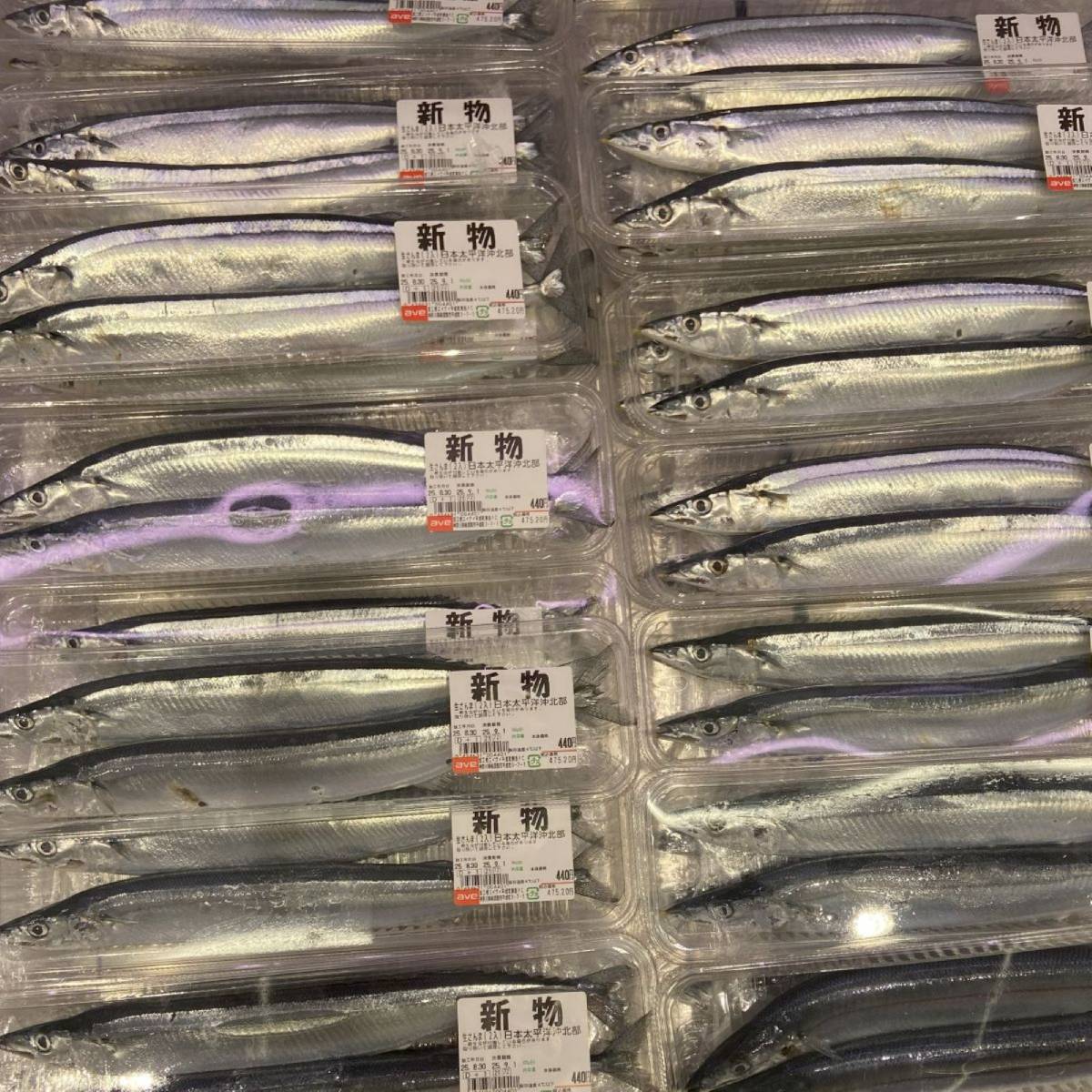
The first landings of Japan’s 2025 Pacific saury season were strong, with fattier fish than last year.
HTB Hokkaido News reported that the first saury landings for the stick-net fishery, which is the first saury fishery to open in Japan, took place at Hanasaki Port in Nemuro City on the morning of August 15. From around 3:00 AM, nine saury fishing boats landed 173 metric tons (MT) of saury, roughly 2.6 times the amount last year. At the opening auction at Hanasaki Market, the highest price was 3,190 yen per kilogram.
On the 19th, Nippon Television reported retail prices for the fresh catch at around 300 yen per fish. The average size of an individual fish was about 160 grams compared with 120 grams last year. At the height of the season in November, prices typically fall dramatically. In past years with strong catches, 100 yen per fish was a common price point, but the imposition of an 8 percent sales tax, inflation, and low catches have caused saury to become a luxury.
While the initial catch in Northern Hokkaido is a promising start, the Fisheries Agency predicts this year's catch will be as low as last year’s. Preliminary figures show that 38,695 MT were caught through November 2024. The season runs mid-August through December.
Japan’s actual catch through December in the previous year, 2023, was 24,046 MT. Thus, last year’s catch and this year’s expected catch are up from recent record lows, but are still only about a tenth of the hauls decades earlier. The record-high catch was in 2008, with 355,000 MT, while the lowest since record-keeping began in 1950 was in 2022, with just 17,868 MT.
The Fisheries Resources Institute’s outlook, based on survey trawls conducted by the Fisheries Research and Education Agency, indicated that for the period August–December 2025, the volume of migrating saury will remain at a low level, and will be lower than last year in the first half of the fishing season and higher in the second half. The proportion of one-year-old fish in the catch will be similar to last year, but their weight will exceed last year's. The fishing grounds in August and September will be mainly in the open seas due to a more northerly path of the warm Kuroshio Extension ocean current in coastal waters.
The most important predictor of saury catch is sea surface temperature, with most saury caught in areas measuring approximately 15 degrees Celsius. So, a more northerly warm current will keep the schools farther offshore.
Saury is an iconic fall fish in Japan—the kanji characters for the fish (秋刀魚) even mean “autumn knife fish.” However, warmer sea surface temperatures around Japan—up by an average of 1.33 °C over the last 100 years according to the Japan Meteorological Agency—have kept saury schools in more northerly waters longer, delaying the main migration to early winter.
Sardines are now the affordable fish of the fall season.