Was greater amberjack an unfamiliar product in Japan?
No. Greater amberjack was already established in Japanese aquaculture. The producer would be entering a mature market with domestic supply, not introducing an unfamiliar Mediterranean species.
A European aquaculture producer planned a major expansion of its land-based production of greater amberjack (Seriola dumerili). As part of planning for increased output, an investor requested independent research to validate potential markets for the additional production.
Chris Loew was commissioned to assess the global Seriola market and identify where the producer could realistically compete.
Greater amberjack competes with other Seriola species that differ in production cost, price, market recognition and consumer preference. Wild and farmed production also interact, while competitive conditions vary by country, season, product form and sales channel.
Market size is not the same as addressable market.
The objective was to determine where the producer had realistic reasons to compete—and where customers could support the required price.
No. Greater amberjack was already established in Japanese aquaculture. The producer would be entering a mature market with domestic supply, not introducing an unfamiliar Mediterranean species.
No. Import quotas and established distribution structures added barriers, while domestic aquaculture already supplied products trusted by Japanese buyers.
The production method offered differentiation, but there was little basis for assuming Japanese buyers would pay substantially more simply because the fish came from a European land-based system.
Not across the broad market. Lower-cost Seriola products could compete for much of the same demand where buyers did not strongly differentiate species.
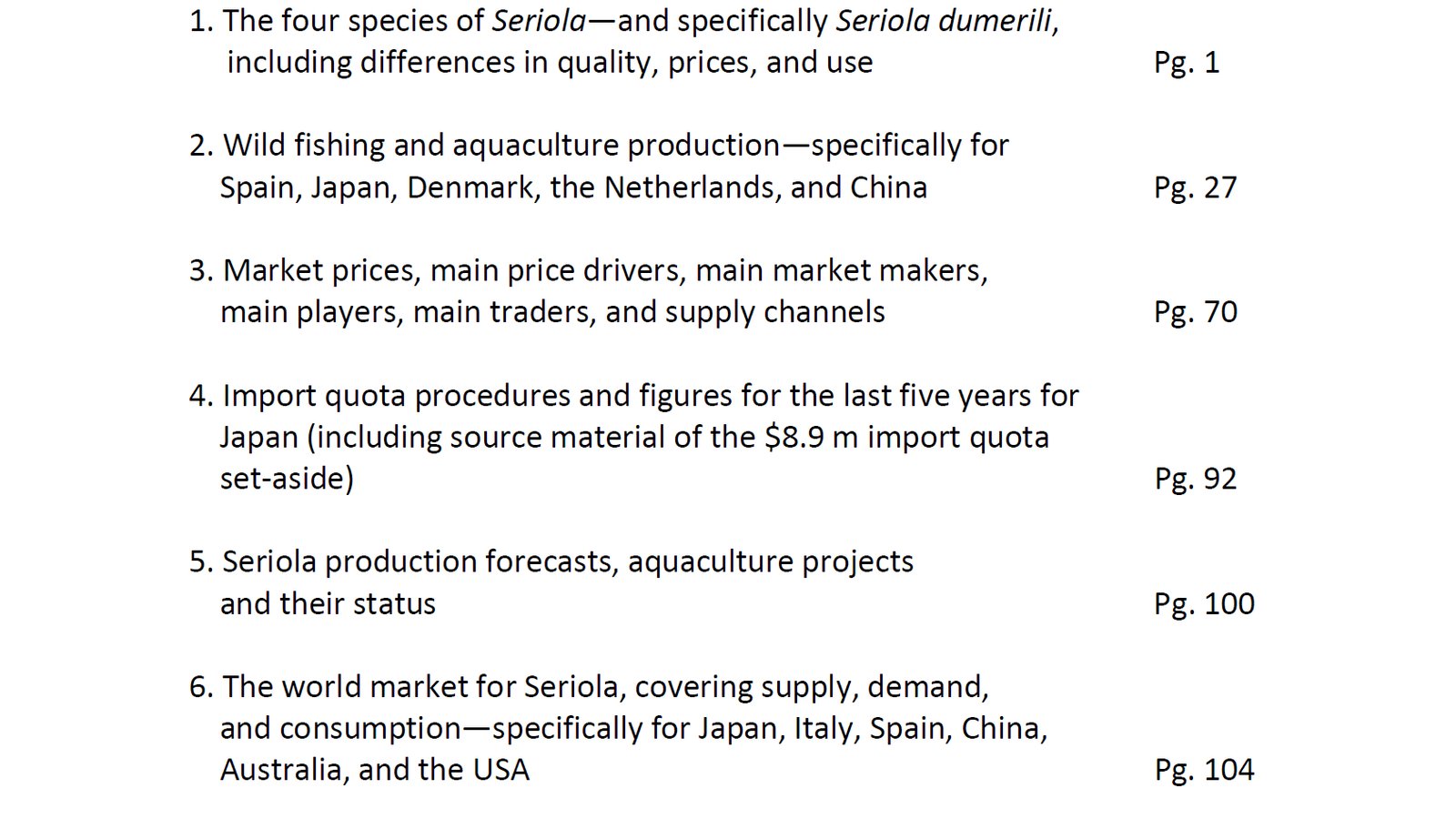
The assessment covered four principal farmed Seriola species, wild and aquaculture production, prices and price drivers, major producers and traders, distribution channels, import restrictions, aquaculture projects and future production.
Sources included government fisheries and aquaculture statistics, wholesale and auction data, trade records, company information, industry interviews and seafood-industry reporting, including Japanese and other foreign-language sources.
The report supplied the numbers behind the analysis while identifying what those numbers could—and could not—support.
Some Japanese government data aggregate multiple Seriola species even though buyers distinguish them by name, use and price.
Producer-cost figures required similar care: species coverage, geographic coverage and the point in the supply chain all affected what could legitimately be concluded from the data.
The US market was broad, but the producer's cost structure limited its ability to compete with lower-cost Seriola products in mainstream foodservice. The analysis therefore focused on where higher-value positioning could be supported.
Its realistic opportunity was narrower: customers and channels able to support the required price.
The research ruled out Japan as a target market for this producer and identified South Florida, Spain and Italy as more plausible areas for further commercial development.
A concentration of upscale Japanese restaurants, the popularity of Mediterranean food, and favorable air-freight logistics made South Florida a plausible higher-value target.
Familiarity with greater amberjack, lower transport costs and the potential advantage of steady regional supply.
Species familiarity, geographic proximity and a market structure more compatible with the producer's positioning.
Despite its large Seriola market, Japan offered a poor competitive fit for this producer: substantial domestic production, established competitors and distribution channels, import constraints, and insufficient reason for buyers to pay the premium required for the imported product.
The complete study included detailed source references and supporting data so management could examine the evidence behind the conclusions.
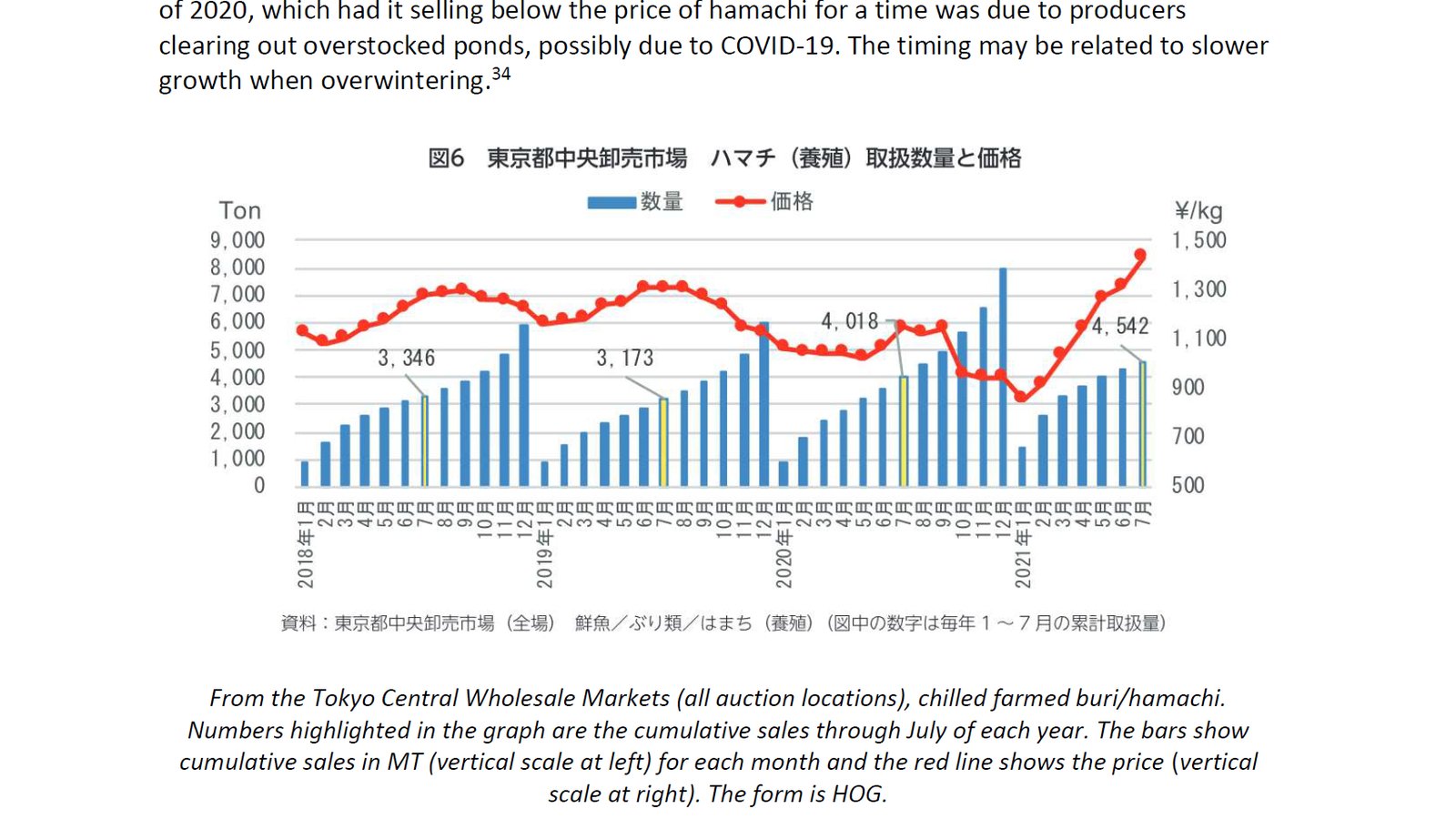
Species differences, market positioning and price relationships within the Seriola complex.
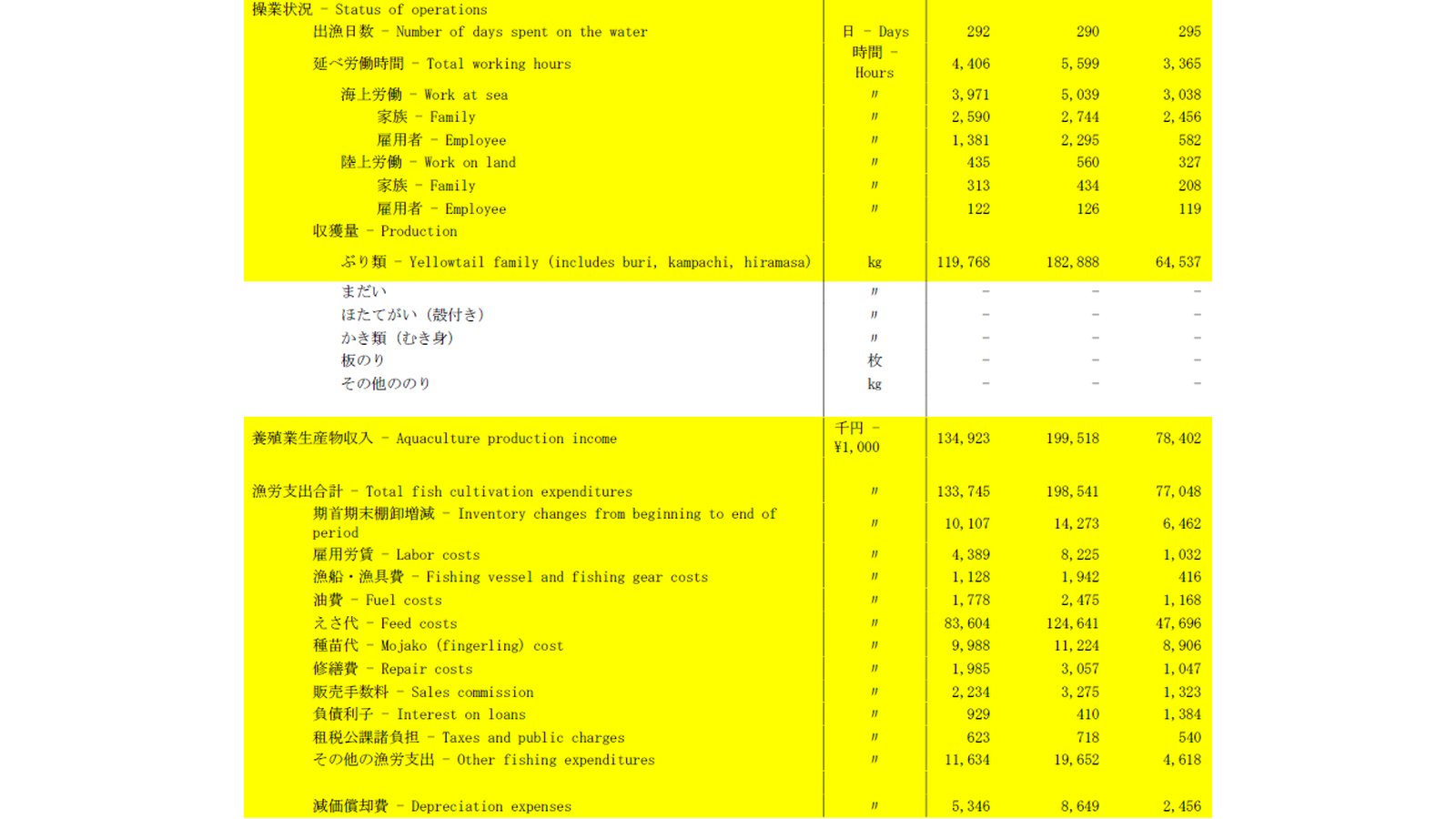
Government producer-cost data with the limitations needed to interpret the figures correctly.
An overview of the subjects covered in the full commissioned market assessment.
J-Fish provides independent seafood market research for producers, exporters and investors who need to understand not only the size of a market, but which part of it they can realistically compete for.
This case study is based on market research conducted by Chris Loew in 2024, before the launch of J-Fish.
A few details will help J-Fish understand what you are trying to decide and suggest an appropriate research scope.